
The Cost of Being Seen—but Not Fully Known
Mar 22, 2026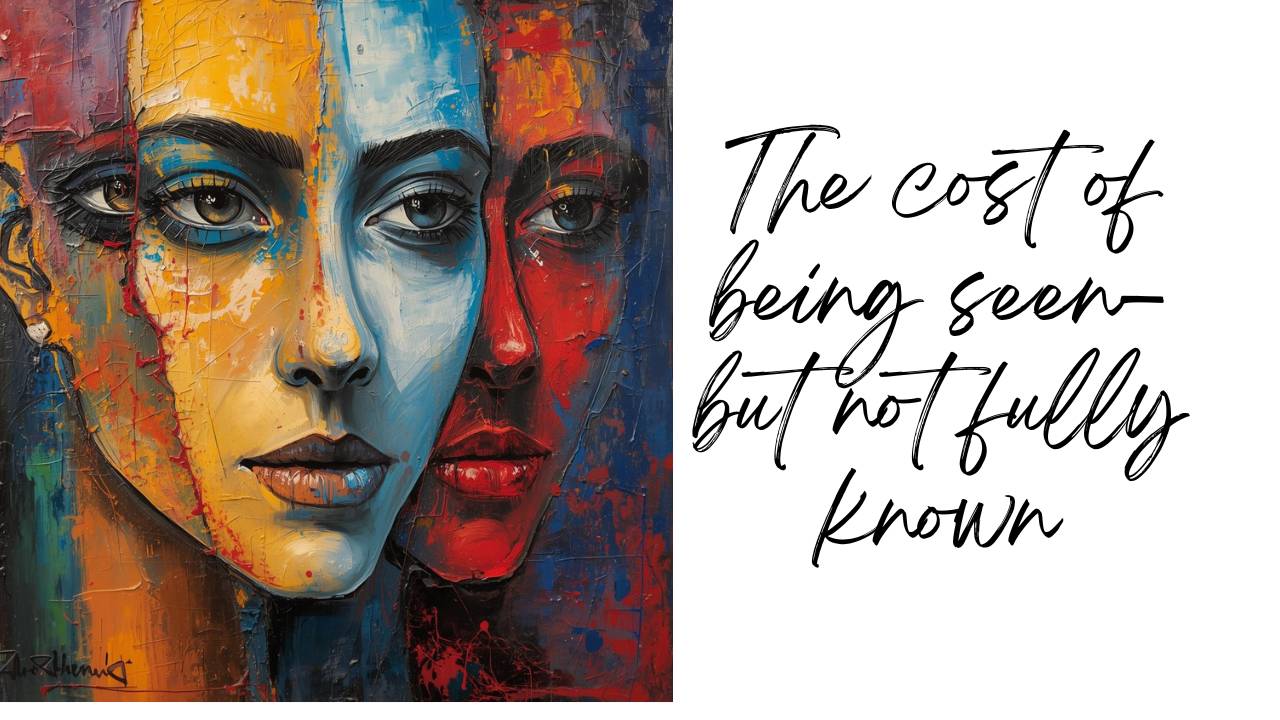
There’s a moment most people recognize, even if they don’t always name it.
It happens right before you say something real. Before you show something raw. Before you hit “post” on something that hasn’t been filtered, softened, or approved by the part of you that wants to keep everything safe.
Your body pauses.
There’s a subtle tightening. A quiet whisper in your mind:
“Maybe say it differently.”
“Make sure it won’t upset anyone.”
“Tweak it just enough to be more digestible.”
It doesn’t feel like fear. It feels like discernment. Like intelligence. Like you’re being thoughtful, aware, and strategic.
But what if it’s not?
What if that moment isn’t wisdom—but a leftover pattern from a time when authenticity had conditions? When being real was only safe if it was polished, edited, and non-disruptive?
This isn’t about wearing obvious masks.
It’s about micro-adjustments.
The subtle, almost automatic calibration you do in real time to stay liked, respected, professional, and unproblematic. You don’t think of it as performing. You think of it as being wise. Reading the room. Keeping the peace.
But there’s a cost to that kind of curation.
Because when you are seen through a version of yourself that has been manually edited for acceptance, it can feel exactly like being invisible—just with better lighting.
From the outside, it may look like connection. People respond. They engage. They affirm.
But internally, something doesn’t land.
Because they are responding to a version of you that isn’t fully real.
And over time, that creates a quiet dissonance.
It’s easy to assume that visibility itself is what feels unsafe. But what if that isn’t true? What if the discomfort doesn’t come from being seen, but from being only partially seen?
Visibility didn’t betray you.
Being partially visible did.
And your nervous system remembers that—even if your conscious mind doesn’t.
So the question shifts.
What if the answer isn’t to try harder to show up, or to push past the hesitation, or to force yourself to be more visible?
What if the shift is to stop editing?
To allow your expression to exist without constant adjustment for approval. To let what is real be seen, even if it isn’t perfectly received.
There is a risk in that, of course. People may misunderstand you. They may not agree. They may not respond the way you hoped.
But consider the alternative.
Being accepted for a version of yourself that doesn’t actually exist isn’t connection.
It’s a form of exile.
An exile that comes with applause.
And while that applause may feel good in the moment, it doesn’t replace the deeper need to be known as you are.
So the real question becomes:
Where are you still trying to be understood, when what you actually crave is to be undeniably yourself?
You don’t have to answer it right away. You don’t have to fix anything or change everything overnight.
Just notice.
Because the moment you stop managing your expression, you create the possibility for something different.
You give people the chance to meet you—not your mask, not your edits, not your curated version—but your actual frequency.
And that kind of visibility is something entirely different.
With rebellion and reverence,
Abi 🖤
Unlock The Science of Manifestation Game!
This free game will teach you how to leverage physics, neuroscience and biological principles to manifest the exact life that you want. And have fun doing it!
Join us now.
We hate SPAM. We will never sell your information, for any reason.

